Two Shot Injection Molding

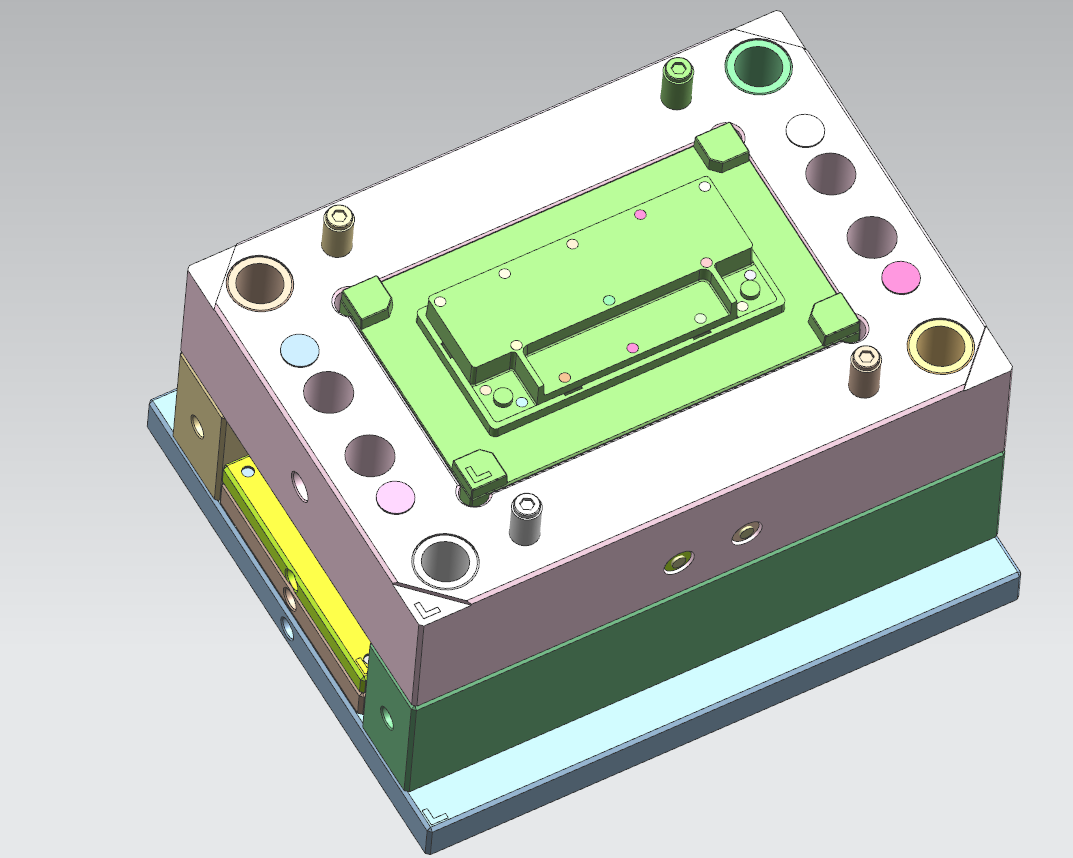
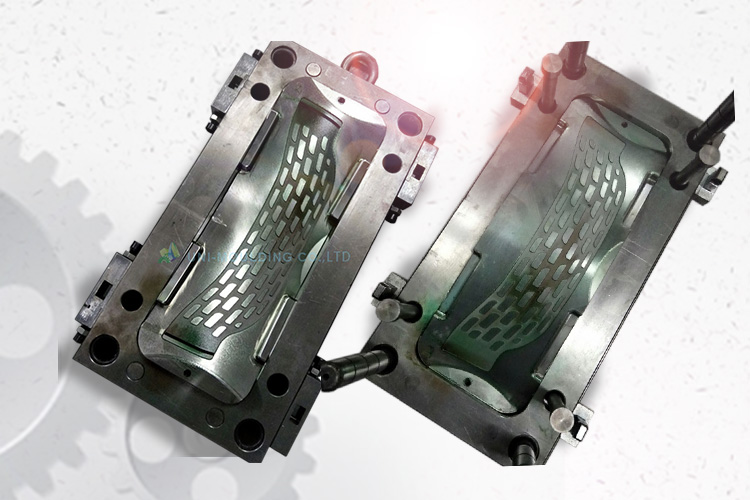
What Is Two Shot Injection Molding? Producing two color or two components injected molded parts from two different thermoplastic materials in one process, quickly and efficiently:Two-shot plastic injection molding, co-injection, 2-color and multi-component molding are all variations of an advanced molding technologyCombining hard plastics with soft materials2 step process performed during a single press machine cycleConsolidates two or more components thus eliminating additional assembly costsUp-to-date fabrication technology allows processors to produce injection molded parts from two different thermoplastic materials. By combining these different materials with the ever-improving molding technology, complex functional parts can now be produced economically and efficiently in massive quantities. The materials may differ in polymer type and/or hardness, and can be fabricated from molding techniques such as dual injection molding, two-shot molding, two color molding, two component molding and/or multi-shot molding. Whatever its designation, a sandwich configuration has been made in which two or more polymers are laminated to take advantage of the properties each contributes to the structure. The thermoplastic parts from these moldings offer excellent performance characteristics and reduced cost. The Benefits and Differences of Two Shot Injection Molding There are a variety of manufacturing methods used to create products using plastic polymers, including two shot injection molding, compression thermoset molding and extrusion. While all of these are viable manufacturing processes, there are several advantages to this process that make it the top choice for many plastics manufacturers. The process is relatively simple; 1 material is injected into a mold in order to make the initial section of the product, followed by a second injection of a secondary material that is compatible with the original material. Two Shot Injection Molding Is Cost Effective The two-step process needs only one machine cycle, rotating the initial mold out of the way and putting the secondary mold around the product so that the second, compatible thermoplastic can be inserted into the second mold. Because the technique uses only one cycle instead of separate machine cycles, it costs less for any production run and requires fewer employees to make the finished product while delivering more items per run. It also ensures a strong bond between the materials without the need for further assembly down the line. Enhanced Product Quality Two shot injection molding enhances the quality of most thermoplastic items in several ways: 1.Improved esthetics. Items look better and are more appealing to the consumer when they are crafted of different colored plastics or polymers. The merchandise looks more expensive if it utilizes more than one color or texture2.Improved ergonomics. Because the process allows for the use of soft touch surfaces, the resulting items can have ergonomically designed handles or other parts. This is particularly important for tools, medical devices and other hand-held items.3.It provides for a better seal when silicone plastics and other rubbery materials are used for gaskets and other parts that require a strong seal.4.It can greatly reduce the number of misalignments when compared to over-molding or more traditional insert processes.5.It enables manufacturers to create more complex mold designs using multiple materials that can’t be effectively bonded using other processes.
Read more

Insert Injection Molding

What is Injection Molding Insert injection molding is the process of molding or forming plastic parts around other, non-plastic parts, or inserts. The inserted component is most commonly a simple object, such as a thread or rod, but in some cases, inserts can be as complex as a battery or motor. Moreover, Insert Molding combines metal and plastics, or multiple combinations of materials and components into a single unit. The process makes use of engineering plastics for improved wear resistance, tensile strength and weight reduction as well as using metallic materials for strength and conductivity. Insert Injection Molding Benefits Metal inserts and bushings are commonly used for reinforcing the mechanical properties of the plastic parts or thermoplastic elastomer products that are created through the insert injection molding process. Insert molding provides a number of benefits that will improve your company’s processes all the way down to its bottom line. Some of the benefits of insert injection molding, include: Applications & Uses for Plastic Injection Inserts Insert molding metal inserts are derived directly from insert injection materials and are regularly used in a wide range of industries including: aerospace, medical, defense, electronics, industrial and consumer markets. The applications for metal inserts for plastic parts, include:

Read more

What is Compression Molding?

Compression Molding Compression molding is the process of molding in which a preheated polymer is placed into an open, heated mold cavity. The mold is then closed with a top plug and compressed in order to have the material contact all areas of the mold. This process is able to produce parts with a wide array of lengths, thicknesses, and complexities. The objects it produces are also high in strength, making it an attractive process for a number of different industries. Thermoset composites are the most common type of material used in compression molding. Four Main Steps There are four main steps to the thermoset composite compression molding process: Advantages of Compression Molding Compression molding is a popular technique for a number of reasons. Part of its popularity stems from its use of advanced composites. These materials tend to be stronger, stiffer, lighter, and more resistant to corrosion than metal parts, resulting in superior objects. Manufacturers accustomed to working with metal parts find that it is very simple to convert an object designed for metal into a compression molding part. Because it is possible to match metal part geometry with this technique, in many circumstances one can simply drop-in and replace the metal part altogether.

Read more

IN-MOLD DECORATING+LABELING

ADVANTAGES OF IMD & IML The in-mold decorating (IMD) and in-mold labeling (IML) technology enables design flexibility and productivity advantages over traditional post-molding labeling and decorating technologies, including use of multiple colors, effects and textures in a single operation, long-lasting and durable graphics, and overall labeling and decorating cost reductions. With in-mold labeling (IML) and in-mold decorating (IMD), labeling and decorating are complete in the plastic injection molded process, so no secondary operations are required, eliminating post-molding labeling and decorating labor and equipment costs and time. In addition, design and graphic variations are easily achieved by simply changing to different label films or graphic inserts in the same part run. The use of in-mold decorating (IMD) and in-mold labeling (IML) results in high quality and visually impressive graphics and finished parts. The graphics and labeling are also very durable and long lasting, since they are encapsulated in the resin as part of the finished molded plastic part. In fact, the graphics are essentially impossible to remove without destroying the plastic part. With the right films and coatings, in-mold decorated and in-mold labeled graphics will not fade and remain vibrant for the life of the molded plastic part. In-mold decorating (IMD) and in-mold labeling (IML) advantages include: APPLICATIONS In-mold decorating (IMD) and in-mold labeling (IML) has become the process of choice for high quality, durable labeling and graphics, employed by many industries in a wide range of applications, a few of which include:

Read more

Motorcycle Plastic Battery Shell Mold.

Motorcycle Plastic Battery Shell Mold. On October 20, we successfully customized and developed a series of battery shell molds (battery shell base mold, battery case cover mold, and copper terminal stamping mold) for a motorcycle power supplier in the United States. In the 32 day mold development process, we helped customers to modify product design, do product mold flow analysis, product 3D proofing and testing, mold design, mold manufacturing (CNC, EDM, mold matching, polishing), and make the T1 injection molding. We succeeded in T1 and received a satisfactory reply from customers. Uni-Moulding is one of the important suppliers offering the one stop proposal of whole line for plastic battery shell production line. It is a modern science and technology enterprise integrating design, development, manufacturing and marketing as one. Our products include plastic injection moulding system, battery shell mold, auxiliary equipment, by 15 years’ experience. With a specific know-how of the plastic battery shell molding production process, it is an ideal partner in the development of complete system for this type of application. In 2013, we began to engage in battery shell related mold manufacturing and ABS battery shell injection molding production. In recent years, we have produced automobile starting power shell molds and exported them to South Africa; Motorcycle spare battery cases are exported to the United States, and related molds are manufactured and injection molding services are provided for European customers. During these years of continuous development, we have accumulated a lot of experience in mold manufacturing, product injection molding and related assembly applications related to battery shells. We will provide customers with high-quality services and cost-effective products. Main processes involved in the production of battery shell mold: The Modeling Discussion / 3D Measurement / CNC Processing / Heat Treatment / EDM Processing / Dimensional Measurement &Mold Fitting / Polishing / Mold Test / Product Packaging

Read more

In-Mold Assembly Injection Molding-IMM

In-mold assembly injection mold making, also known as in-mold decoration, is a manufacturing process that combines the creation of a plastic part with decoration or assembly in a single injection molding process. This process involves placing a decorative or functional component, such as a label or a circuit board, in the mold cavity before the plastic is injected.The plastic is then molded around the component, creating a strong adhesion between the two parts. This process eliminates the need for a separate assembly step, reducing both production time and cost.In-mold assembly injection mold making is commonly used in the production of consumer products, such as electronics casings, cosmetics containers, and automotive interiors. It is a highly efficient and precise method of manufacturing that produces high-quality, consistent parts with minimal waste.In-Mold Assembly Injection Molding (IMM) is a type of injection molding process that involves assembling components inside the mold and then injecting molten thermoplastic material around these components, providing a fully integrated final product. IMM can reduce production costs, shorten production cycles, and decrease environmental pollution.The advantages of IMM include:1. High Efficiency: IMM can complete the assembly of multiple parts in one injection, saving production time.2. Reduced Pollution: As IMM only requires injection molding once, it can reduce waste and secondary pollution, making it more environmentally friendly.3. Cost Reduction: Because there is no need for additional assembly processes, production costs can be lowered.IMM has a wide range of applications, such as automotive parts, electronic products, communication equipment, home appliances, and more.

Read more

What is blow molding?

What is blow molding? Blow molding is the process of forming a molten tube (referred to as the parison or preform) of thermoplastic material (polymer or resin) and placing the parison or preform within a mold cavity and inflating the tube with compressed air, to take the shape of the cavity and cool the part before removing from the mold. Any hollow thermoplastic part can be blow molded. Parts are not just limited to bottles, where there is one opening and it is usually smaller in diameter or size than the overall body dimensions.  These are some of the most common shapes used in consumer packaging, however there are other typical types of blow molded parts, including, but not limited to: Blow Molding Manufacturing Processes There are three main types of blow molding: The main differences among them are the method of forming the parison; either by extrusion or injection molding, the size of the parison and the method of movement between the parison and blow molds; either stationary, shuttling, linear or rotary. In Extrusion Blow Molding-(EBM) the polymer is melted and the solid extruded melt is extruded through a die to form a hollow tube or parison.  Two halves of a cooled mold are then closed around the parison, pressurized air is introduced through a pin or needle, inflating it into the shape of mold, thus producing a hollow part.  After the hot plastic has cooled sufficiently, the mold is opened and the part is removed. In EBM there are two basic methods of extrusion, Continuous and Intermittent.  In continuous, the parison is extruded continuously and the mold moves to and away from the parison.  In Intermittent, plastic is accumulated by the extruder in a chamber, then forces through the die to form the parison.  The molds are typically stationary under or around the extruder. Examples of the Continuous Process are Continuous Extrusion Shuttle machines and Rotary Wheel machines.  Intermittent extrusion machines can be Reciprocating Screw or Accumulator Head.  Various factors are considered when selecting between the processes and the size or models available. Examples of parts made by the EBM process include many hollow products, such as bottles, industrial parts, toys, automotive, appliance components and industrial packaging. With respect to the  Injection Blow Systems – (IBS) process, the polymer is injection molded onto a core within a cavity to form a hollow tube called a preform.  The preforms rotate on the core rod to the blow mold or molds at the blowing station to be inflated and cooled.  This process is typically used to make small bottles, usually 16oz/500ml or less at very high outputs.  The process is divided into three steps: injection, blowing and ejection, all done in an integrated machine.  Parts come out with accurate finished dimensions and capable of holding tight tolerances—with no extra material in the formation it is highly efficient. Examples of IBS parts are pharmaceutical bottles, medical parts, and cosmetic and other consumer product packages. Injection Stretch Blow Molding- (ISBM) the Injection Stretch Blow Molding- (ISBM) process is similar to the IBS process described above, in that the preform is injection molded.  The molded preform is then presented to the blow mold in a conditioned state, but before final blowing of the shape, the preform is stretched in length as well as radially.  The typical polymers used are PET and PP, that have physical characteristics that are enhanced by the stretching part of the process.  This stretching gives the final part improved strength and barrier properties at much lighter weights and better wall thicknesses than IBS or EBM—but, not without some limits such as handled containers, etc..  ISBM can be divided into the One Step and Two Step process. In the One Step process both preform manufacture and bottle blowing are performed in the same machine.  This can be done in 3 or 4 station machines, (Injection, Conditioning, Blowing and Ejection).  This process and related equipment can handle small to high volumes of various shape and size bottles. In the Two Step process the plastic is first molded into the preform using an injection molding machine separate from the blow molder.  These are produced with the necks of the bottles, including threads on the open end of the closed end hollow preform.  These preforms are cooled, stored, and fed later into a re-heat stretch blow molding machine.  In the Two Step Reheat Blow process, the preforms are heated (typically using infrared heaters) above their glass transition temperature, then stretched and blown using high-pressure air in the blow molds. The Two Step process is more suited to very high volumes of containers, 1 liter and under, with very conservative use of resin providing great strength, gas barrier and other features.

Read more